The Short Answer: Sugar silos require regular cleaning and maintenance to prevent contamination and maintain product quality. Proper maintenance includes scheduled inspections, cleaning protocols, and adherence to FDA and OSHA regulations.
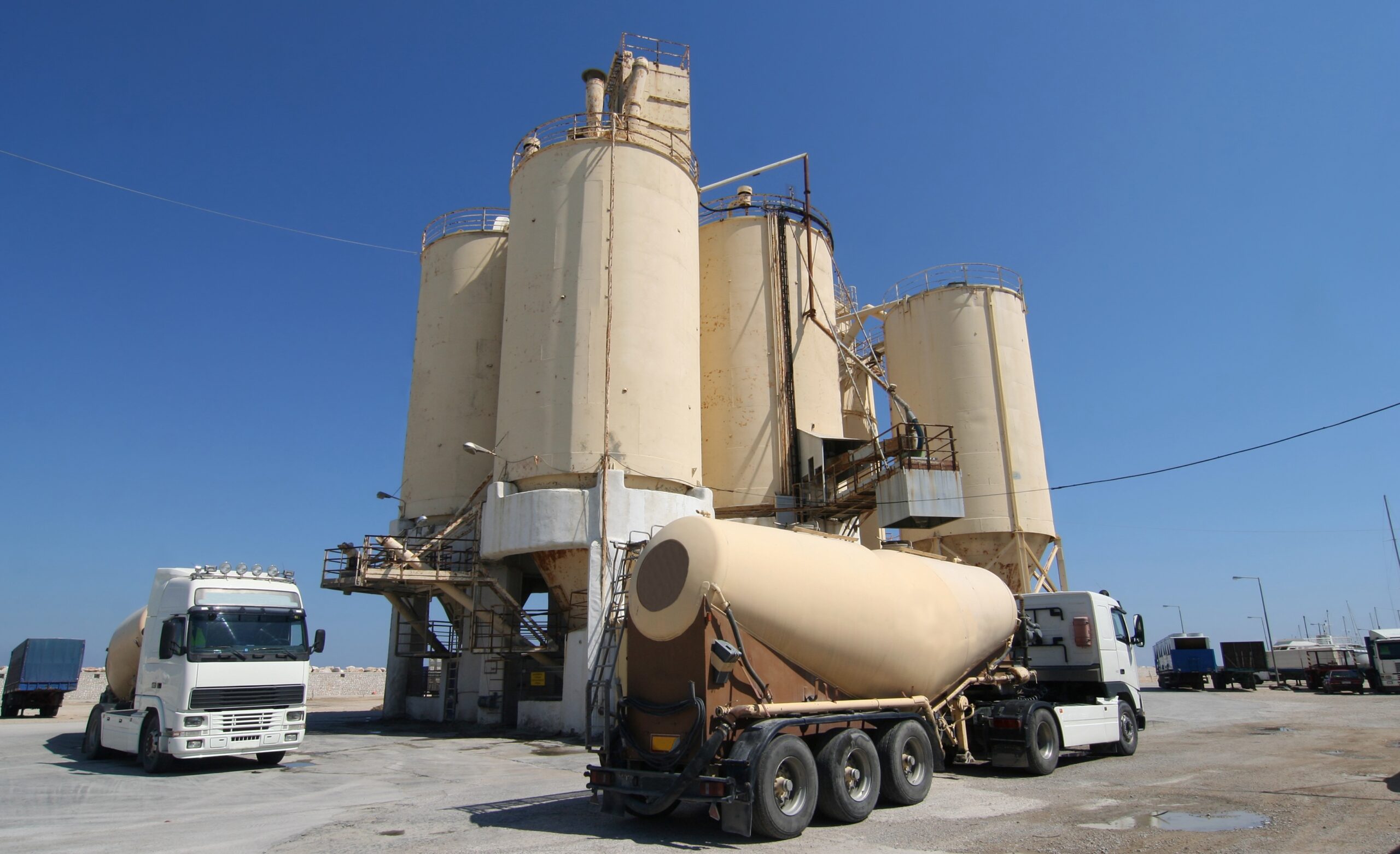
Sugar silos are large-scale storage structures designed to safely house bulk quantities of processed sugar before distribution. A large silo is capable of storing thousands of tons and requires careful design for structural and food safety. These cylindrical structures serve as the backbone of sugar storage operations, allowing producers high storage capacity while maintaining quality.
A modern sugar storage silo system consists of integrated components working together. The main vessel features reinforced walls, temperature monitoring systems, and specialized coating materials that prevent sugar from sticking. Supporting elements include loading mechanisms, discharge systems, and ventilation equipment.
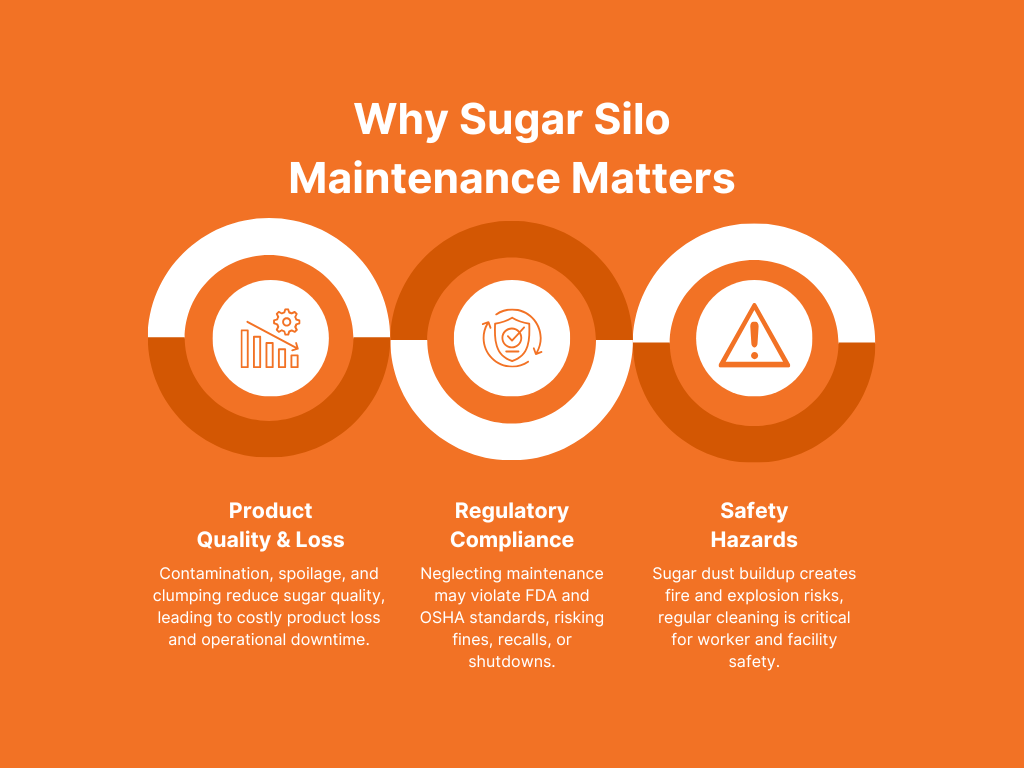
Regular maintenance and cleaning of sugar silos protect product quality and worker safety. Without proper upkeep, sugar can clump, spoil, or become contaminated, leading to significant product loss and potential regulatory violations. Additionally, sugar dust accumulation poses explosion risks, making systematic cleaning essential for safety.
The sugar storage industry operates under strict regulatory oversight. The FDA enforces rigorous sanitation standards, while OSHA mandates specific safety protocols. This guide will walk through maintenance schedules, cleaning procedures, and best practices to keep your sugar silo operating at peak efficiency while meeting compliance standards.
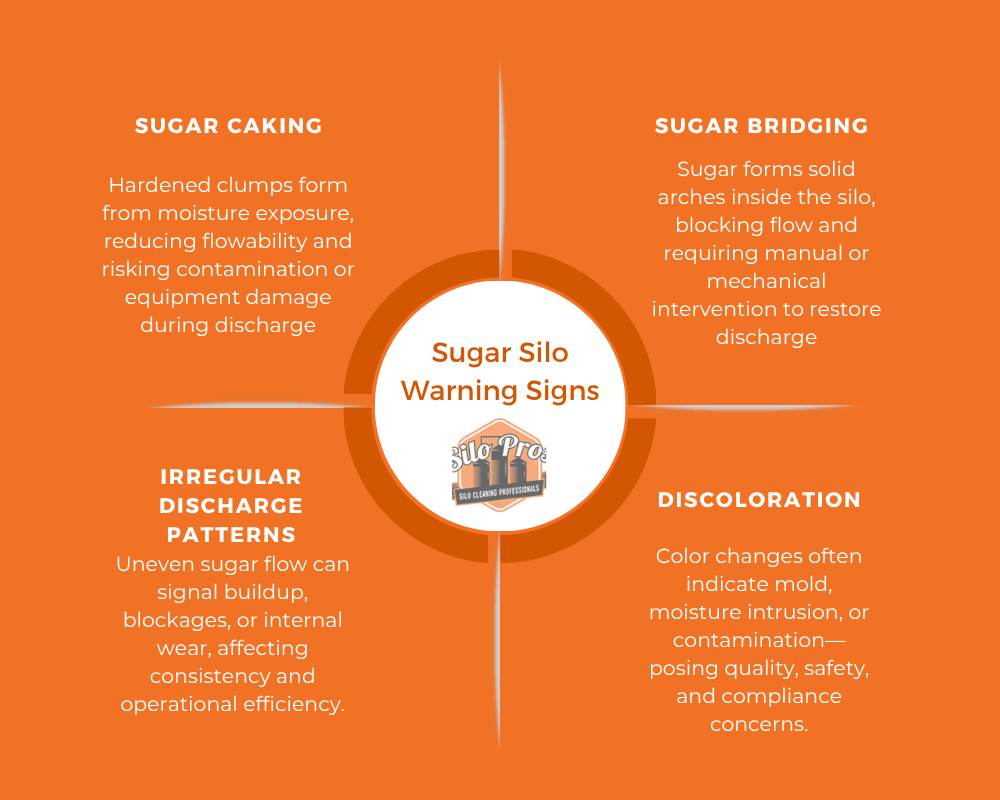 Sugar silo cleaning becomes necessary when specific warning signs appear in storage silos. Understanding these indicators helps prevent product loss and maintains food-grade safety standards.
 A well-planned maintenance schedule prevents sugar buildup in storage silos, reduces equipment downtime, and maintains finished sugar quality. Regular checks catch small issues before they become major problems.
Signs and Reasons for Sugar Silo Cleaning
Sugar silo cleaning becomes necessary when specific warning signs appear in storage silos. Understanding these indicators helps prevent product loss and maintains food-grade safety standards.
Visual Warning Signs
Wall deposits and dry sugar caking are immediate red flags in sugar silo storage. When sugar particles stick together and form lumps along silo walls, this indicates residual moisture problems. Sugar bridging, where product forms solid spans across openings, blocks proper flow. A quick inspection might reveal darker patches or discoloration, showing where moisture has affected the stored white sugar.Operational Problems
Flow disruptions often signal cleaning needs. When sugar doesn’t discharge smoothly or operators notice irregular discharge patterns, built-up material is likely the cause. Temperature changes inside the silo can lead to condensation, which makes sugar handling difficult. Product quality tests showing inconsistent results point to storage conditions that need attention.Regulatory Requirements
The FDA’s Current Good Manufacturing Practice (CGMP) guidelines mandate regular cleaning of sugar silo facilities. These rules focus on preventing contamination and maintaining sanitary conditions. OSHA safety measures address worker safety during cleaning operations, including confined space protocols and proper ventilation standards. Regular cleaning prevents:- Product contamination
- Equipment damage
- Production delays
- Failed inspections
- Worker safety risks
Professional Sugar Silo Cleaning Methods
Professional sugar silo cleaning requires specialized equipment and techniques to remove buildup and maintain food-grade standards. Commercial cleaning services use industrial vacuum systems, pneumatic tools, and FDA-approved cleaning solutions to thoroughly clean storage silos from top to bottom.Equipment and Tools
Professional cleaning services arrive with specialized silo cleaning equipment designed for sugar industry maintenance:- High-powered industrial vacuum systems
- Pneumatic whips and scrapers
- Extension poles with mount attachments
- Food-grade cleaning solutions
- Advanced filtration systems
- Professional-grade inspection equipment
Professional Cleaning Process
Initial Assessment- Inspection of dry sugar buildup locations
- Documentation of problem areas
- Creation of a customized cleaning plan
- Testing of residual moisture content
- Roof vent and filter cleaning
- Upper wall residue removal
- Mid-section sugar deposit cleaning
- Floor and discharge area maintenance
Advanced Cleaning Techniques
Professional services employ several methods to remove sugar deposits:- Controlled air pressure cleaning
- Mechanical scraping systems
- Specialized vacuum extraction
- FDA-approved solutions for stubborn lumps
- Moisture-controlled cleaning processes
Quality Control Measures
Professional cleaners maintain strict safety measures throughout:- Regular progress inspections
- Testing of cleaned surfaces
- Documentation of cleaning results
- Final quality assurance check
- Post-cleaning reporting
Preventive Maintenance Strategies for Sugar Silos
A well-planned maintenance schedule prevents sugar buildup in storage silos, reduces equipment downtime, and maintains finished sugar quality. Regular checks catch small issues before they become major problems.
Daily Monitoring Tasks
Operators should perform quick visual inspections of the sugar silo’s exterior and interior access points. Check discharge gates and valves for proper operation. Monitor temperature readings and watch for any unusual sounds or vibrations during dry sugar loading or unloading. Look for signs of residual moisture around seals and joints.Weekly Maintenance Routine
Test all safety measures, including emergency stops and pressure relief valves. Inspect conveyor belt systems and pneumatic transfer equipment for wear. Clean sensor probes and verify rotating paddle detector systems are working properly. Check ventilation fans and filters, replacing any that show excessive dust accumulation.Monthly System Review
Conduct thorough inspections of all silo components including:- Stainless steel wall surfaces for signs of sugar buildup
- Support structures and foundation
- Electrical systems and control panels
- Calibration of monitoring instruments
- Seals, gaskets, and connection points
Documentation Requirements
Maintain detailed records of all maintenance activities:- Date and time of inspections
- Staff member performing checks
- Issues found and repairs made
- Temperature and moisture readings
- Equipment calibration dates
- Cleaning activities performed